Search This Blog

Showing posts with label social democracy. Show all posts

Sunday, April 21, 2024

The ALP - Arguing for a Minimum Program


by Dr Tristan Ewins ; ALP member of over 30 years

The ALP has long been characterised by internal ideological divisions between self-identifying social democrats and self-identifying socialists.  This division has always problematic because there are competing definitions of social democracy and socialism.  Sweden has been described both as socialist and social democratic. Democratic socialists always contested the notion that the former Eastern Bloc represented ‘real socialism’.   Other socialists continued to find inspiration in one or another form of Leninism.  Some self-identifying social democrats simply see their politics as ‘progressive but moderate’.  In a relative sense we think here of a ‘traditional social democracy’. Other social democrats identify as ‘revolutionary social democrats’: basically a continuation in the tradition of early Marxism. (before Leninism, and typified to a degree by the example of Austrian social democrats in the 1917-1934 period)  This paradigm of socialism (the Austrian example specifically) is notable for adherence to revolutionary aims ; even if pitched as ‘revolutionary reforms’ or ‘slow revolution’.  It is not opposed to socialism (or democracy) as such – but rather is a reclamation of an old politics where ‘socialism’ and ‘social democracy’ were not opposed to each other.  The question I intend to explore here is ‘what is a reasonable minimum program for the ALP, which brings together the Party’s diverse ideological elements?’.   What elements of a Party program should all members of the ALP share adherence to?  This is no easy question to answer: as there must be a degree of ‘give and take’, but without compromising on certain basic issues.  There’s also the question of what the modern ALP Left should stand for: and whether or not it is also ‘losing its way’.


The ALP used to adhere – in theory – to its own ‘Socialist Objective’.  This was always complicated by the so-called ‘Blackburn Amendment’ which committed itself to socialisation to the extent of eliminating “exploitation and other anti-social features”.   It was long considered by some as a ‘dead letter’ ; at odds with the practice of actual Labor policy ; and containing a contradiction: at least as far as Marxism is concerned.  For Marxism exploitation is structurally inbuilt in capitalism (expropriation of surplus value) : and socialisation must be absolute to eliminate it entirely.  Arguably the Objective was also at odds with political practice on the ALP Left ; despite the Left fighting tooth and nail for many years to preserve it.  When arguing for the preservation of the Objective Left leaders such as Kim Carr watered down their arguments to the point  where there was a very significant loss of meaning and content – in an attempt to broaden its appeal.  Guy Rundle has described Carr’s project as one of ‘national social democracy’ characterised by greater self-reliance in manufacturing.  But does this meet appropriate minimum requirements as a ‘stream of socialism’?  Meanwhile, Rundle portrays the rest of the party of embracing “distributionism” which aims to broaden economic ownership, including a place for co-operatives, but does not aim to negate capitalism’s core dynamics.  This means more than competition and markets ; it means accumulation of capital and hence political power in the hands of a dominant capitalist class – achieved through economic relations of exploitation. Meanwhile  avowed ‘Third Way’ politics water down social democracy itself – even in the traditions of ‘mixed economy and welfare state’ – to the point of meaninglessness.

For socialists in the Labor Party the reality is we cannot have it all our way.  And there are questions as to what ALP Left politics are really about these days anyway.  Cynics might argue that in practice the ALP Left simply stands for “a slightly bigger welfare state and social wage” ; and “a slightly more progressive tax system”.  Though incremental improvement of welfare, progressive tax and the social wage is desirable if the progress is sustained. The Left itself needs its own statement of beliefs: which involve a more fundamental critique of capitalism.  This might include critiques of monopolism, exploitation, alienation created by physically demanding work, and work involving lack of creative fulfilment and control ; as well as economic cycles and crises, and the distribution of political and economic power.  But these could also include building blocks for the broader Party.

To begin it is worth considering the common ground between different schools of socialism and social democracy in terms of a minimum program.  This would be inclusive of a steadily expanding social wage and welfare state – preferably to Nordic proportions. (in the sense that was realised at the height of Nordic social democracy)  Though Nordic Social Democracy has long been in retreat ; and this means we need to take their example with a grain of salt.   This means more robust pensions ; comprehensive socialised health (including Medicare Dental)  ; and appropriate subsidies for services and amenities  fundamental to modern human existence. This includes power, water, socialised or co-operative housing, communications (including internet access), transport, availability of nutritious food, and so on.  Ongoing Education is also crucial to modern life ; and all people ought be able to pursue personal fulfilment through education as well as skilling up to meet labour market requirements. 

While the reality is that the modern labour market is characterised by exploitation (workers do not keep the full proceeds of their labour power) , we do operate in a global economy where it is necessary to sell labour power in order to participate.   Right now there is ‘no way out’ of capitalism ; but that does not mean we cannot have a critique which informs strategies which address the anti-social, irrational and unfair features of the system. The Left should have a critique – including of the core workings of capitalist political economy ; and it needs a code of principles which provides this ; but a minimum program for a wide range of socialists and social democrats also needs to account for an alliance of forces including elements who are not committed to negating capitalism ; even far into the future.  Something needs to change in discourse more broadly – with an effective counter-hegemony - to achieve anything like a consensus on a Socialist Objective within the ALP.  This means we need a mobilised Left fighting to challenge ‘common sense’ ideas both within and outside of the Party.  Arguably the Communist Party of Australia used to play this role very effectively ; as did other Western Communist Parties - even though they did not usually enjoy significant electoral success.  (The Communist Party of Italy – the PCI - is a very important exception ; having won very strong electoral success for many decades)

That said, a minimum program could include a commitment for the foreseeable future to a democratic mixed economy ; or a hybrid system.  Strategic socialisation should be pursued for reasons of economic efficiency, equity, and sovereignty.  In areas characterised by a lack of competition, or by collusion – government business enterprises can be a game changer.  Think banking, general insurance, health insurance, postal services. In other areas it is appropriate to have natural public monopolies.  Infrastructure in energy, water, communications, transport -are other areas where the logic of natural public monopoly ought apply.  Public monopolies in these fields translate into reduced cost structures ; with the benefits flowing on to the economy more broadly, including consumers.  Governments – including Labor Governments – have systemically undermined the place of natural public monopoly in the economy.  But we need a debate on this within the Party ; about a commitment to strategic public ownership ; and if possible to natural public monopoly in specific fields such as water, energy, transport and communications infrastructure ; as well as a restoration of a public sector job network after the example of the old CES.

Still ;  it is hard enough already getting many self-identifying  ‘moderate’ social democrats to even agree to restoring a public sector role in these fields (in competition with private enterprise) ; let alone restoration of natural public monopolies.  Nonetheless the Left should lead a debate on natural public monopoly and strategic (including competitive) government business enterprise.  Specifically, a minimum program should refer to a democratic mixed economy ; and this should frame an internal debate which the Left tries to lead.  Government could also invest in primary industries ; and in Australia especially there is great scope to benefit from a public role in minerals exploration and mining.  Billions in revenue could be directed towards social programs.

Co-operatives could also play a central role in a democratic mixed economy ; and as far as they reach they attack economic exploitation at its very roots.   It’s important to observe, however, that even in Spain where the successful Mondragon Co-operative operates – that co-operative ownership is not very significant in the context of the broader economy.  But particularly, in Australia government could underwrite co-operative enterprise to enable it to remain competitive on global and local markets ; including by investment in Research and Development and economies of scale.  Government could also provide cheap loans to facilitate the establishment of co-operatives ; including smaller scale co-operatives – eg: co-op cafes – which not only attack exploitation ; but which also allow intimate creative control by workers.  Strong policies could secure a significant (as opposed to marginal or minimal) place for co-operatives in the Australian economy.   But importantly, co-operative enterprise is not a substitute for the public sector: both play a core role in a democratic mixed economy.  Commitment to promoting a greater and greater role for co-operatives in the economy needs to be integrated in a minimum program.

Other areas where an agenda of popular and workers control could be advanced include co-determination and collective capital mobilisation.  In Australia superannuation funds have become powerful players in investment.  Though they operate in the capitalist context ; and tend to adhere therefore to capitalist imperatives.  (eg: share value maximisation) Hence they advance a distributionist agenda ; but not much which is more radical.   Also public pension funds would have been more equitable ; and the superannuation system threatens the eventual marginalisation and undermining of the public Aged Pension over time.

Meanwhile, co-determination can manifest either as consultation, or in the sense of all parties having to agree on major decisions. In Australia the starting point would be workers’ representatives on company boards. Hence workers could have ‘an insiders’ view’ on the decisions affecting their productive lives.  This specific strategy would not be radically transformative in the sense of workers’ control ; but it would be a step forward.  Again we need to set the broad framework in a minimum program ; and then for the Left to lead a debate within that framework.

There is a broad scope to reform welfare. Labor should also be committed to strengthening the Aged Pension, Disability Pension, Job Seeker’s Allowance,  Sole Parents’ Pension , Austudy, and other welfare.   The Disability Pension (and National Disability Insurance Scheme supports) should be for life- in the sense of not being withdrawn depending on age.  Also, there should be more scope to earn additional income through casual or part-time work (or other means) without losing the Disability Support Pension. And entering into a relationship should not see a substantial portion of welfare payments withdrawn.  The NDIS should be strengthened more broadly also  ; not undermined.  University fees should be replaced by progressive tax levies which effectively relate proportionately to the actual financial advantage gained.  A Garaunteed Minimum Income relating to the cost of all fundamental needs could consolidate basic universal economic rights.

In a minimum program reference could be made to all pensions ; and the imperative of providing them on the basis of need.  (again perhaps expanded, and then indexed quarterly to inflation or cost of living – whichever is greater).  The debate on a Garaunteed Minimum Income can be won ; but it may take time to integrate it into a Minimum Program.

Finally there are issues of human rights, labour market and industrial relations rights, and housing – which also need to be addressed in a Minimum Program.  Labor needs to be unequivocal in a Minimum Program in its commitment to freedom of association, assembly and speech ; as well as the right to basic needs such as housing, heating, cooling, nutrition, education, health services, access to transport services, and access to communications and information technology.  This needs to be amended as new relative rights and needs arise with technological and economic progress.  The right to engage in Pattern Bargaining and to withdraw labour in good faith (whether for industrial or political goals) needs to be promoted ; and at the lower end of the labour market especially more robust minimum standards and regulation need to be provided for.  This should have a substantial effect if implemented in the case of heavily exploited ‘feminised’ industries.

Again, shelter is a human right ; and government policy (including provision of public housing) should seek to achieve its universal fulfilment. Government could also help facilitate co-operative housing, and affordable housing – through subsidies and regulations.  The Federal Government and the States have long lagged behind here ; and support from the Federal Government especially is needed – as they do not endure the same fiscal constraints as do the other tiers.  Recently there has been a trend to promote ‘affordable’ housing (as an alternative to public housing) through deals with private developers ; but while this strategy can provide better outcomes for some renters, it does not achieve either efficient financing or equity compared with public housing.  Labor needs a minimum program which significantly expands an ongoing policy of building enough high quality public housing to meet the demand ; while looking to the Austrian example to destigmatise public housing and establish it as an option for all Australians ; including but not limited to the most disadvantaged.  A minimum program needs to aspire to this ; and it should not be controversial for genuine social democrats and socialists.

In conclusion Labor also needs an independent foreign policy outlook and a humane policy with regards to rights of asylum seekers. We should lead the way on defusing conflicts between China and the United States and heading off any potential war. And there is no place for Mandatory Detention in any Party of the broad Left.  We should also promote 'deep democracy' ; supported through civics education 'for active, informed and critical citizenship' ; and government programs which put active citizenship at the centre of policy. This could include government funding to access public space - including, for instance shopping centres - where political and social movement organisations across most of the spectrum could promote their own ideas of 'active citizenship'.

In short – and to summarise in conclusion - a Minimum Program should promote a progressively expanding social wage and welfare state ; as well as a democratic mixed economy – with stronger public and democratic sectors which aim to improve underlying cost structures to the benefit of the broader economy and consumers - through strategic public ownership.  Here, the social wage includes socialised health and education ; and ensuring universal access to shelter (including public housing) , information and communications technology, transport services ; and a minimum income where access to energy and water is also universal.  And with a steadily more progressively-structured tax system – with an open commitment to just economic redistribution.  And we will define the welfare state’s role as comprising social provision of income ; especially the vulnerable ; with cross-over between welfare state and social wage where it comes to social services.  

Also the minimum program should include reference to the progressive expansion of economic democracy on several fronts ; and the provision of fundamental industrial and broader human rights.  This means a regulated labour market and the right to withdraw labour in good faith for industrial or political purposes.  As well as the minimisation of the anti-social complications of capitalism ; including its crisis-prone nature ; its tendency to concentrate wealth and promote monopolism ; as well as problems of inbuilt obsolescence – and of collusion and other anti-competitive or anti-consumer practices.   Also ‘the market’ does not necessarily ‘organically’ provide for human need – though there is a role for it in providing for the flexible satisfaction of individualised needs structures.   The need for choice – and hence competition – means there are limits to socialisation – at least under current conditions. ‘The market’ has a place ; but so too does social provision which goes beyond ‘market logic’.

This article has sought to explore the issues which should inform a minimum program for the ALP.  It should be possible to win broad agreement on most of this article’s broad tenets.  In other areas the article has outlined areas where minimum policies could be applied ; but where the Left should lead the debate in terms of achieving stronger policies. 

Also importantly ; there are limits to purely electoral politics – and there is a need for an organised counter-hegemony.  The counter-hegemony should seek a more radical reframing of debate and issues than the minimum program ; and it is necessary to build an alternative to the old Western Communist Parties who used to contest ‘political and economic common sense’.  But that is beyond the broad scope of this article. 

The point is that it is possible to achieve broad agreement on a minimum program which mobilises the broad Labor Party and frames its policies.  The minimum program, here, attempts to frame the ALP as involving currents ranging from traditional social democratic (mixed economy, labour rights and welfare state) on the relative right, to democratic socialism and revolutionary social democracy on the Left.  (involving a more ambitious agenda of economic democracy and socialisation) And these various currents are considered as being capable of solidarity behind basic programmatic and policy principles and agendas.  The most diluted ‘Third Way’ positions – which stand for little in terms of the traditions of social democracy or socialism – need to be seen as liquidationist – and hence are not accepted within the framework of the minimum program.

It is hoped that this article will promote debate and influence the development of the ALP’s Platform running up to the next National Conference.  And also the development of a program behind which both elements of the ALP Left and the ALP Right might be able to coalesce ; as well as non-aligned elements.  This goes so far as to problematise the very idea of an ‘ALP Right’ which is right-wing on the broader political spectrum. Even the most relative right-wing elements in the ALP should be relatively Left on the broader spectrum.  We all need to see ourselves as part of a ‘broad Left’, and in this sense having common cause.  Once we agree on this perhaps we can truly ‘move forward together’.

Saturday, January 6, 2024

Does 'Radicalisation' have to be a Problem?


Dr Tristan Ewins

Often we hear in discussions of Islamic/clerical Terrorism and the far right that the problem is ‘radicalisation’. This now has an integral place in how people view political ‘extremism’.  No doubt some political extremism is bad. There is no place for right-wing ethno-nationalism or fascism in Australia.  And there is no place for religious Terrorism.  But ‘radicalisation’ used to mean more than this.  When Spartacus rebelled against slavery and forced gladiatorial combat in ancient Rome he was a radical in his time. So too were the early, revolutionary social democrats who critiqued capitalism’s exploitative nature ; and well as its toll in exploitation and human suffering.  And the anarchists in Spain who fought against fascism ; and sought to build a co-operative economy. 

Discourse on ‘anti-radicalism’ has the underlying narrative that centrist, capitalist neo-liberalism is the only legitimate choice ; and all other choices are ‘radical extremes’.  It poses as an absolute ; and hence is anti-democratic in the final instance. Some would even call this scenario as ‘verging on the totalitarian’. (locked into an absolute system with no way out ; and very little scope to even discuss or propose alternatives)

But remember that before the French Revolution democracy was barely heard of.  And the French Revolution itself descended into Bonapartist dictatorship ; but it left a lasting impression which led eventually to the ascendance of liberal democracy.  That was progress for its time ; but today subtle and not-so-subtle cultural manipulation has people denying their own interests in favour of capitalist Ideology.  At the same time we can view the Russian Revolution of 1917 in a similar vein as the French Revolution.  It began with high hopes of equality and liberation ; but under pressure from internal and external threats descended into the personal dictatorship of Stalin.  Similarly, though, as with the idea of democracy, the  idea of socialism is relevant still.  And we should not give up on the prospects of its future re-emergence.   It resonates in a world where people continue to suffer exploitation and deprivation ; and the system delivers waste, crisis, and instability. But the ‘left intelligentsia’ has all but given up on class politics ; and somehow we need to restore an ethical and social-scientific critique of capitalism and the class system.  This does not mean we turn away from modern critiques of race and gender.  It does mean we re-conceive of our responsibilities on the Left to lead struggles for change.  The future of struggle is in our hands. We should also remember when people point to the ‘toll’ of socialism, that capitalism delivered two World Wars with tens of millions killed ; and countless ‘interventions’ – also with millions of deaths.  We can also consider Western Marxism – which made its peace with democracy ; as well as avowed Marxists like Rosa Luxemburg, Julius Martov and Karl Kautsky – who early on worried about the trajectory of the 1917 Russian Revolution.

So ‘radicalisation’ does not need to mean senseless violence, religious intolerance and Terror without end.  Radicalisation can mean questioning certain fundamentals of the socio-economic system.  Critiques of gender and race were radical in that they challenged ground-in discrimination, oppression and segregation.  But somewhere along the way the critique of capitalism and class was abandoned ; and does not even figure into the thinking of many self-styled radicals of today.  Starting with the Critical Theory of Marcuse in the 1960s Leftists began to suppose the working class had been co-opted by capitalist prosperity.  Hence Marcuse turned to a ‘Great Refusal’ from those at the margins to challenge capitalism.  Hence race, gender and sexuality gained a new sense of importance.  For a time students were also central to this New Left. And though Marcuse retained a critique of capitalism (and remained a revolutionary) , many of those who followed refused ‘Grand Narratives’ – which in practice meant it was ‘unthinkable’ to propose  a large scale alternative to the existing systems.

The socialist Left currently occupies a similar position to that suffered by democrats between Bonapartism and the end of the First World War – which saw widespread embrace of liberal democracy in an effort to blunt the challenge of socialism in the wake of unimaginable slaughter.  The Great Depression also saw an ascendance of socialist ideas in response ; but polarisation in the context of Cold War saw their widespread stigmatisation and abandonment.  Especially in the US in the wake of 1950s McCarthyism and the decades which followed.

Today there is an opening for  a ‘new radicalism’. Modern capitalism leaves millions struggling amidst a precarious existence – with inconsistent and exploitative labour. Housing is widely unattainable ; and many struggle to subsist amidst inflation ; and the use of interest rates (as opposed to tax for instance) to contain that inflation.  The wage share of the economy is at an all time low (or at least is as low as in living memory). Many are expected ‘as a matter of course’ to commit to unpaid overtime.  And many capitalist interests resist the necessary actions for neutralising climate change because it would impact on profits. 

Amidst all of this, also, there is an attempt to divide middle and higher income workers from everyone else.  Social Democratic and Labour Parties do not talk much about class inequality anymore ; but governments of all stripes preside over a flattening of the tax system, the extension of user pays, and labour market bifurcation with declining labour market regulation and declining union organisation and militancy. Some very-well paid workers comprise what Marxists once called a ‘labour aristocracy’, living in relative material privilege.  It figures we cannot always take everyone with us, and we cannot stop capitalists playing ‘divide and conquer’.  We need to deal with this without giving  up and abandoning our values. Almost no-one points to the problems associated with all this ; especially so-called ‘Third Way Centrists’.  Into this scenario socialists could readily propose an alternative.  Beginning with the restoration and extension of the social wage and welfare state ; and leading to a democratic mixed economy where co-operative and government enterprise rise to new prominence – also providing competition which counters capitalist monopolism or collusion.  Also we could do with re-regulation of the labour market at the lower end. This would be the beginning of a long-term struggle to improve society and end waste and exploitation.

Therefore we need to begin to question whether ‘radicalisation’ is always a bad thing. There is a liberal-capitalist hegemony ; but it is one which is not afraid to abrogate its essentials (eg: freedom of assembly, association and speech) when powerful interests are threatened.  And it occupies an economic space ‘that is not to be questioned’ ; but comprises a neo-liberalism which could itself seem ‘extreme’ if compared with the assumptions of the pre-Thatcher and pre-Reagan world.  We need to challenge the fundamentals of this social and economic order if we are to rekindle hope of a better world.  Hopefully there will be a realisation that the radicalism of a revived revolutionary social democracy (and other associated movements) is not a threat to liberties ; but in fact may comprise the very movements which will save them.  Most importantly this ‘new radicalism’ must involve a movement which mobilises from below ; and attempts to construct what Gramsci would call a ‘counter-hegemonic historic bloc’.   This means organising at all levels to challenge capitalist power and Ideology in social formations, popular culture, workplaces and even the State itself.  And even where such a bloc is not mobilised or coherent enough to take State Power ; the mobilisation itself will affect public and popular discourse ; and this will influence policy.  

But this is all predicated upon a rejection of the hegemony of neo-liberal ‘Centrism’ and the realisation that radicalisation is not always such a bad thing.  We can change the world ; but it all starts with a rejection of the ‘Common Sense’ that ‘There Is No Alternative’.

Tuesday, August 30, 2022

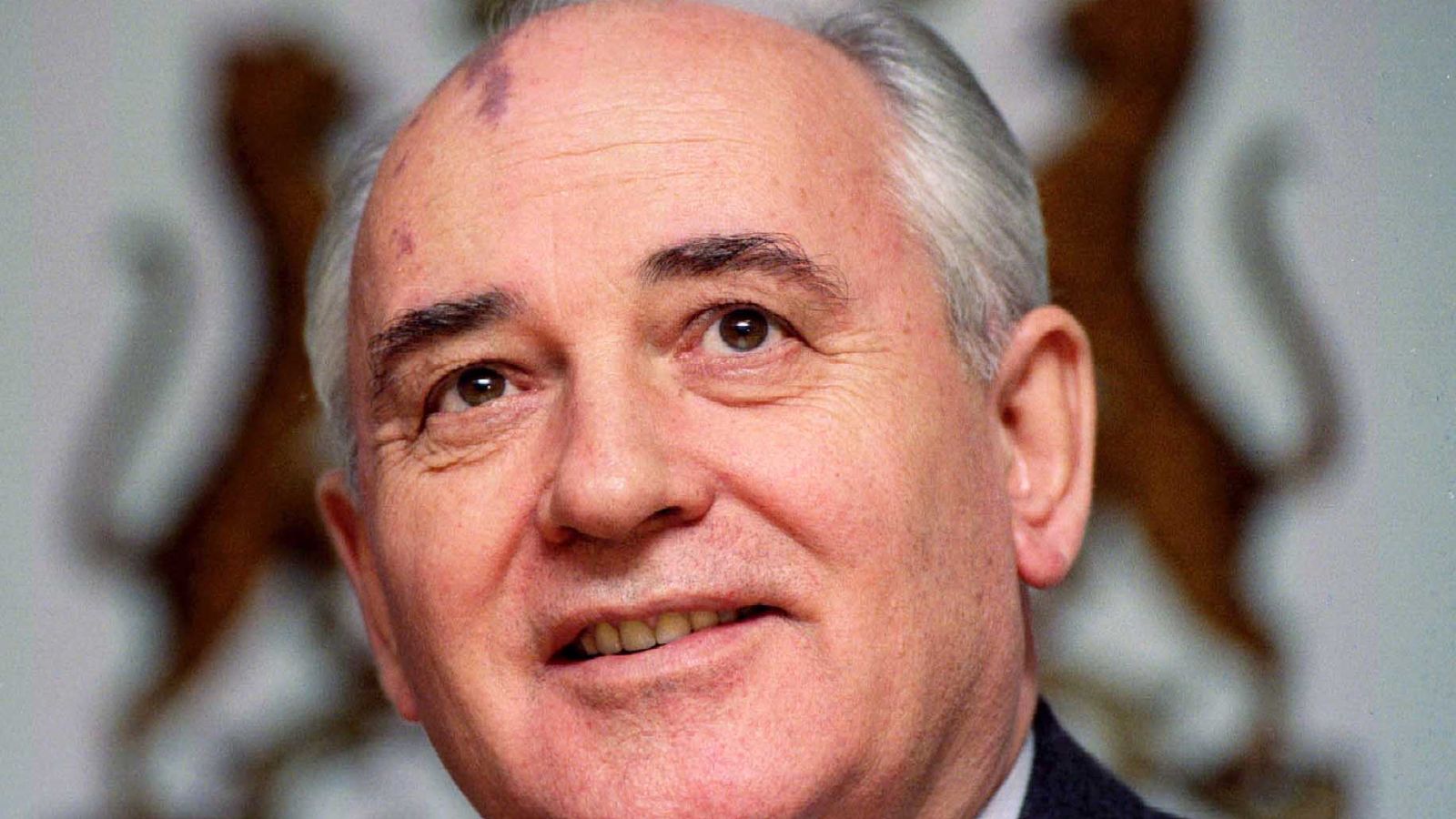
Remembering Mikhail Gorbachev and his Legacy


above: Former Soviet leader, Mikhail Gorbachev


Dr Tristan Ewins


Mikhail Gorbachev has passed away at the age of 91.  In the West Gorbachev is still held in high esteem for ‘ending the Cold War’.    His policies of Glasnost (‘openness’) and Perestroika (‘Restructuring’) opened the way for reform, but also perhaps sadly the disintegration that then followed, with the effective theft of peoples’ assets and industry that was later to occur under Boris Yeltsin.  The world of (capitalist) ‘oligarchs’ that has followed the collapse cannot seriously be considered as in any way better than the former state of affairs ; and liberties did not last long in the former USSR following Gorbachev’s fall from power.  Though it’s interesting that we do not call our own billionaires ‘oligarchs’ in the West ; and especially in the United States where corporate lobbyists have unmatched power.

Gorbachev understood that the USSR could not compete militarily with the West while it failed to compete economically.  In the 80s military competition had accelerated and there was a widespread fear of nuclear war which we have now forgotten.  Gorbachev agitated for peace at the same time as Reagan pursued his ‘Star Wars’ plan, which aimed to make a nuclear war ‘winnable’.   At the same time there was repression, Terror and mass murder closer to home, in countries like Guatemala, Nicaragua and El Salvador.  And yet the United States outpaced the East largely because of a ruthless exploitation of its economic periphery. (eg: including Central and South America)  In many ways Gorbachev heralded the kind of reform democratic socialists had long been hoping for, legitimising the USSR for many, but also helping to precipitate a collapse.  In retrospect it would have been better if the USSR had not collapsed.  But decades of Stalinism meant there was little in the way of a mobilised and independent civil society.  The consequence was that when the collapse occurred there was little resistance. In light of all this it would have been better if Gorbachev had mobilised civil society in defence of democratic socialism from the outset.

Gorbachev’s passing reminds us of missed opportunities, and begs the question of whether there was a better way forward.  Today there is war in Ukraine ; and the Russian Government entertains ideas of an Imperial restoration.  Russia may find a place as an important trading partner of China, but cannot really hope to restore ‘former glory’ when opposed by almost the entirety of Europe ; and the US.  Also the rupturing of Russia’s trade ties with Europe is harming both sides immensely. Though Russia’s still-massive nuclear arsenal deters uncontrolled escalation.

In later years Gorbachev commonly referred to himself as a Social Democrat ; and tried to establish a social-democratic party in Russia.  On the other hand, arguably the USSR was still ahead of Western Social Democracy on many fronts prior to its collapse.  Mainly in regard to the spread of socialised industry.  Maybe Gorbachev was trying to move with the times, and promote the best possible outcome available at the time. Though his efforts to promote social democracy in the Russian Federation largely met with failure.  In some ways China demonstrates how in certain respects compromise with capitalism can help an ostensibly socialist state to economically compete with the West. Though this could also lead to a crisis of legitimacy and identity. 

Perhaps attempts to consolidate a democratic USSR might have failed given the influence of various nationalisms, but now we will never know.  In the mid to late 1980s Mikhail Gorbachev represented the best hope for peace, détente and avoiding nuclear war.  With his passing we should also consider the world that ‘might have been’ ; and mourn the ultimate failure of Gorbachev’s reforms ; with capitalist restoration and the rise of an Imperial Russian State.

Thursday, October 21, 2021

Rejecting the Cashless Welfare Card a Good Start for Labor ; but further cultural change necessary


                             above: Class Struggle has Always been Essential to Social Progress


Dr Tristan Ewins


It is now approaching a decade since Andrew ‘Twiggy’ Forrest was approached by then Prime Minister, Tony Abbott, to advise on the creation of a ‘cashless welfare card’.   While Forrest intended for all income to be ‘quarantined’ for use only in approved areas (like groceries), the Indue card which has emerged in trials set a floor of 80% of income to be with-held, and available for ‘approved purposes’. Aimed largely at indigenous peoples, and the welfare-dependent more broadly, the ‘Indue’ card follows after the failed ‘Basics card’ of 2007 - which attempted something similar as part of a government ‘Intervention’ into indigenous communities in the Northern Territory.  The newer ‘Indue’ cashless welfare card applies to the welfare-dependent more generally in the communities in which it is being trialled.  All those affected find themselves in the position of being restricted in what they can spend their money on, including on food and second hand goods. While a relatively small proportion are affected by gambling addiction or alcoholism, the ‘card’ is a source of humiliation and control over the welfare-dependent more generally.   Indue, which includes Conservative Coalition party luminaries as shareholders, stands to make a packet from the humiliation and micro-management of the every-day life of already-disadvantaged Australians.

Instead of humiliating marginalised Australians government ought instead be seeking to empower them, perhaps including through the mechanism of a Guaranteed Minimum Income (GMI).  Arguments against a GMI include the suggestion it may displace some existing pensions. (some of which are less threadbare than others)  But if a ‘no disadvantage’ test were applied this need not be a problem.  ‘Mutual obligation’ provisions have always been worrisome; as in practice they became a source of effective labour conscription.  This might also increase competition for jobs at the ‘lower end’ of the labour market ; and in the process reduce the bargaining power of those workers. 

A good alternative could be the establishment of a ‘Social Bill of Rights’ ; which would include rights to nutrition, adequate and dignified shelter, power, comprehensive health care, communications-related empowerment (eg: internet access), transport, education and social inclusion. A ‘Guaranteed Minimum Income’ could then be deployed alongside pensions and other programs intended to make this vision reality.

In the 18th and 19th Centuries the unemployed were driven into ‘Poor Houses’ where they were exploited, humiliated and robbed of their dignity.  There is a long history of ‘blaming the poor’ for their own disadvantage.  Centuries later some of the same assumptions remain in play beneath the surface.  Labor is arguing it will end the long Conservative experiment with the ‘cashless welfare card’.   The Coalition has so far not mustered the political courage (or political capital) to implement the program more broadly.  But as with ‘WorkChoices’ ; the old agendas continue to ‘fester’ behind the scenes.   The debate needs to be brought into the glare of public scrutiny and buried decisively.

Labor’s opposition to the Indue card is welcome.  But Labor needs a broader, stronger vision, including reform of welfare, minimum wages and labour market regulation, industrial rights, and embedded social human rights.  Its retreat on the tax debate has regrettably narrowed its options.   But a program for change could re-emerge through a determined reform of the social wage and welfare state ; which branched in various directions – including a Universal Aged Care Insurance Scheme, as well as improvement of pensions, with rescission of punitive mechanisms.  And a bold commitment to build a million new public housing units – as suggested by the Greens.  Labor really ought to be coming up with these kind of ideas on its own initiative.

There is a minimum standard of living which must apply to all citizens.  This idea of a ‘floor’ beneath which none are allowed to fall is reminiscent of the more progressive variations of the ‘Third Way’ which emerged in the 1990s.  But to mobilise as broad a base as possible, and provide distributive justice for all a more robust Social Democratic or Democratic Socialist agenda than Blairism is necessary.

It seems Social Democratic Parties have been on the defensive and on the back foot for decades. And indeed they have been.  For some the logic of retreat has been internalised.  We need to re-establish a notion of what comprises ‘progress’.  That means fairer distribution, industrial rights,  social rights, and the re-establishment of a robust mixed economy to help make this vision reality.  The Indue ‘cashless welfare card’ is the current ‘Conservative frontier’ ; where it attempts to reshape public ‘common sense’ on the further rescission of the welfare state, and the re-establishment of a ‘Poor House’ mentality ; which ‘gives the whip hand’ to employers through poverty, compulsion and labour conscription. 

Labor needs to go back to ‘first principles’ and work out the consequences of that.  Which is that being a ‘broad church’, Labor needs to be united behind ‘baseline’ social democratic and democratic socialist values and agendas.  Containing inequality and ending poverty ought be non-negotiable ; as should the proposal that this must be pursued through industrial rights, labour market regulation, a mixed economy, progressive taxation system, expanded social wages and welfare state provisions, and intervention into the capitalist system. (ultimately to end exploitation ; but also to ameliorate the impact of its crises upon workers and the vulnerable in the meantime)

The cashless welfare card needs to be defeated and exposed for the punitive mentality it embodies.  But we need a progressive movement which is willing to ‘go onto the front foot as well’.  A movement which has an idea what ‘progress’ entails, and which rejects a logic of endless retreat ; ameliorated only by the ascendance of ‘social liberal’ agendas as applied to gender, sexuality, and so on.  And in the context of the marginalisation of social conservatism, and its replacement by an ideology of neo-liberal cosmopolitanism. 

A ‘change of direction’ involves accepting class struggle as a progressive phenomenon ; an ‘engine of social progress’.  Only when that logic becomes entrenched does progress become undeniable. And while Hawke’s vision of “Reconciliation” appealed to many ; bosses soon became tired of ‘co-determination’ with unions once they had extracted crucial concessions.  And once organised labour lost its bargaining position. 

‘Reformists’ and Revolutionaries were once agreed on the progressive nature of class struggle.  Within Labor factions and amongst others we need, also, to combine behind such a shared notion. Bringing together Labor members behind the idea of a progressive class struggle is crucial ; an idea that we are all broadly in the same fight.  Reinforced by daily experience everywhere from Party branches to unions, and from student politics to the social movements.   There is a fight for the heart and soul of the ALP, and the heart and soul of Australia. There is no place for a punitive cashless welfare card in a progressive Australia.  May solidarity in the name of renewed class struggle relegate it to history.

Monday, November 4, 2019

On Socialism Today - Planning a Way Forward


The following article - which the author plans to submit for publication by the Australian Fabians - is an in depth survey of the background and options for democratic socialism in Australia and the world.  The idea is to spark debate in the lead up to a series of events in Victoria planned for 2020.  Your contributions to the debate are also welcome!


Dr Tristan Ewins


Socialistic sentiment can be traced back to the slave revolt of Spartacus and Peasant uprisings in Europe ; for instance that led by Thomas Muntzer in Germany.  But ‘modern socialism’ began with those labelled as ‘utopians’ by Karl Marx.  Figures like Robert Owen – who personally wanted to convince the bourgeoisie (and nobility) of an egalitarian, communal society based around the means of production.   (specifically communes of up to 3,000 people) And all those others who depended on a ‘socialist vision’ to convince people of the desirability of a socialist order ; as opposed to Marxists who based their approach on ‘the fact of class struggle’.

Generally, socialists preferred equality ; an end to exploitation ; extension of democracy to the economy.  Marxists wanted to socialise the means of production to end both exploitation and the destructiveness and wastefulness of  capitalism and its boom-bust cycle.

But Marx had another criticism of capitalism ; and that was the way in which the division of labour and demanding nature of much work traumatised workers.   This was his theory of Alienation. Today in Australia for instance we are a world away from the working conditions of the 19th Century.  But in call centres, offices and factories the division of labour can still exclude creative control and work fulfilment.  Indeed, work conditions can still be traumatising.

In Germany where the class struggle was advanced the Social Democrats arose as a combination of the Marxists (Eisenachers) and the Lassalleans.  Lassalleans (led originally by Ferdinand Lasssalle) believed in industry-wide co-operatives with state aid.  Eventually Marxism became dominant.  But by 1914 in Germany right-wing ‘socialists’ had come to predominate in unions and the parliament, and those people eschewed internationalism and supported the First World War.

Before World War One both the European and British socialists supported the class struggle and the fight for universal suffrage to advance workers’ rights.  But Britain was relatively liberal ; and this resulted in less emphasis on revolution and more emphasis on incrementalism.

Fabianism arose in the 1880s ; and came to represent a movement to influence opinion in liberal and progressive circles. Especially in the Labour Party in Britain.  Beatrice and Sidney Webb (prominent British Fabians) expressed sympathy with the achievements of Soviet Communism – but that view did not last.  Some Fabians would focus on practical public policy ; others on the more radical aim of incrementally replacing capitalism.  Again: Generally Fabians were gradualist rather than supporting a ‘sudden rupture’.

Modern Australian Fabianism shared the British Fabian principles and was formed organisationally in 1947.  The height of Fabian influence was in the Whitlam Labor Government.

After World War One the broad Left was generally divided into Communist, Social 
Democratic and Labourist Camps.   Although pockets of Social Democracy remained highly radical – as in Austria in the 1917 to 1934 period.  (Austro-Marxism)   These sought a ‘middle path’ between Bolshevism and ‘mainstream’ international social democracy. And there were anarchists and anarcho-syndicalists – who were significant in the Spanish Republican forces and the fight against the Nazi-backed fascist insurgency of Franco in the Spanish Civil War.

From the 1940s through to the 1980s Swedish Social Democracy enjoyed remarkable success (replicated to various degrees in other Nordic countries) with full employment, active industry policy, strong unions, and a strong welfare state.  For the overwhelming majority of this period Social Democrats held government. Basically workers received social security in return for a ‘corporatist settlement’ including wage restraint.  The full employment achieved under the ‘Rehn-Meidner model’ also made a stronger welfare state possible. Though Walter Korpi conceived of the  Swedish situation differently:  as a ‘democratic class struggle’, involving mobilisation of ‘Power Resources’ and compromise depending on the balance of class power. But in the 70s and 80s Sweden also had to respond to the Oil Shocks and devalue the Krona.  The ‘Meidner Wage Earner Funds’ plan sought to compensate workers for wage restraint by giving them collective capital share.  But this implied a radical redistribution of wealth over time.  Also - because it appealed only to workers and not to citizens, it could be argued that the funds could have included a wider base. (which is democratically preferable anyway)  Capitalists went on the offensive : socialists on the defensive. And there has been a slow retreat since.

Up until and including the 1970s and 1980s there remained strong pockets of radicalism in many Labourist and Social Democratic Parties.  But the Oil Shocks of the 70s and the drive to restore profits divided the Left and led to Socialist retreat.  Also the Soviet Collapse during 1989-1991 had an enormously demoralising effect on the Western Left ; despite the fact the Western Left had long distanced itself from Stalinism. It’s not unreasonable to see the Gorbachev reform movement as a window of opportunity ; and a missed opportunity.

From Hawke and Keating onwards Australian Labor has broadly internalised neo-liberal Ideology.  Small government,  privatisation, free trade, limits on the liberties of organised labour, trade agreements which give capital an effective ‘veto’ on regulation and public sector expansion.  Marxism used to have a strong base in the Socialist Left.  But increasingly the factions have lost ideological cohesion ; and have been subsumed in the mainstream political discourse.

Indeed, the experience of Hawke and Keating inspired Tony Blair and Antony Giddens with their ‘Third Way’ or ‘Radical Social Democratic Centre’.  In the 19th and early 20th Centuries ‘Centrism’ had been a largely Catholic phenomenon including limited support for trade unions, labour market regulation and welfare.  Since Giddens and Blair the ‘Third Way’ has come to represent ‘neo-liberalism with  a human face’.   Punitive welfare on the one hand, but also the principle there should be an economic and social ‘floor’ below which no-one should be allowed to fall.  Blair also marginally increased tax.  (will Australian Labor still consider tax reform for the next election?)  But he would not retreat an inch in opposing any re-socialisation – no matter how badly privatisation had failed.  (eg: of railways)  In Australia more recently ‘Centrism’ as epitomised by the ‘Centre Alliance’ struggles to maintain a credible liberalism – let alone any kind of social democracy. For instance there was conditional support for the ‘Ensuring Integrity’ union-busting legislation.  Today ‘Centrism’ in Australia can  mean a shallow populism cashing in on broad disillusionment with the two party system.   Significant parts of the ALP Right consider themselves ‘Centrist’ after the Blairite model. Blairites also generally accept capitalism as a given.

Fast-forward to 2019 and ‘What is to be done?’.

Capitalism remains more vulnerable than people think. There is much focus on public debt, but private debt is a ‘ticking time bomb’ that could lead to loss of confidence, panic and collapse.  In Australia, the US and much of the world private debt is many times the level of public debt.  The Australian economy especially has come to rest on the housing bubble. Millions are locked out of home ownership ; but sudden and radical devaluation would cause panic and collapse.  The boom-bust cycle remains a fact: but governments focused on public debt are less likely to engage in counter-cyclical measures. This could one day mean recession (or Depression) as the ‘solution’ to indebtedness.   Modern Monetary Theory (MMT) has it that government can ‘create money’ at will ; but this is not without limits. It involves a  degree of redistribution which capitalists hate – but also inflation.  Progressive tax is still more effective at redistributing wealth in a targeted and progressive way.  But certainly the MMT crowd are on to something.

The Labor Party today is probably inclined to want to ‘save capitalism from itself’.  The welfare state and higher minimum wages can assist by boosting expenditure and demand.  A return to a meaningfully mixed economy can help by reducing cost structures via natural public monopolies. This could flow on to the private sector as well.   As well, this could counter oligopolistic collusion – for instance in banking.  (actually promoting competition)  Higher government expenditure can also add money to the economy ; increase demand ; and ameliorate the explosion of private debt – which is a ticking time-bomb for the economy. (here and globally) 

An expanded social wage, welfare state, collective consumption and social insurance – can also provide social justice and social security. Think reformed pensions – easing means testing and increasing payments.  Public housing.  Better-funded schools and hospitals. More money for the Pharmaceutical Benefits Scheme.  More efficient public provision of infrastructure. (because of a better rate of borrowing and a ‘public interest test’ rather than share value and dividend maximisation)  Also consider National Aged Care Insurance and a withdrawal of regressive user-pays mechanisms.  As well as a retreat of user-pays in Education.

These are ameliorative reforms that can improve peoples’ lives.  But Australia is still captive to the global economy and will suffer along the rest of the world in any ‘general downturn’ or ‘collapse’.

Over the long term we still need to think about an alternative to capitalism. Sub-Prime and the Global Financial Crisis did not only reveal instability – It also revealed the gap between Use Value and Exchange Value as Marx would put it.  That is: there was an abundance of housing amidst widespread destitution and homelessness.   This is a real capitalist failing and vulnerability.

Marx’s weakness was that he did not propose any concrete alternative vision to capitalism. He assumed ‘the class struggle would take care of things’.   So maybe in part the ‘Utopian Socialists’ were on to something?  The context of class struggle had to be engaged with ; but also concrete visions for the future.  Today perhaps we need ‘provisional utopias’. We cannot afford to be ‘a force of pure negation’ with no vision for the future. Especially after the real historical experience of Stalinism.

But capitalism is a globally-reinforcing system.  You can’t just ‘go it alone’ in revolutionising the entire economy.  There are economic AND political constraints.

But what can be done is to begin a process of ‘revolutionary reforms’.  Say in the spirit of the interwar Austrian Social Democrats.  Even today in Austria there is a legacy in Vienna of 60% public housing – and overwhelmingly high quality public housing.  A ‘democratic mixed economy’ would stabilise capitalism (through strategic socialisation and redistribution) while at the same time advancing towards an alternative.  As in Austria this would also involve a counter culture: a rebuilding and reassertion of the labour movement ; but also a coalition with other social movements.  What Gramsci would have called a ‘counter-hegemonic historic bloc’. That also involves establishing online presences ; other publications ; public meetings ; progressive radio and television ; social events of various kinds ; plays ; workers’ sport ; radical music etc.  Establishing footholds where-ever possible.

Importantly the decline of industrial labour (with ‘deindustrialisation’) has widely meant a decline in class consciousness.  Service sector workers can be just as exploited ; but are more likely to think themselves ‘middle class’ or lack class consciousness.   We can and should fight this. But the industrial working class might not any longer be seen (in the Marxist sense) as a ‘finally redemptive’ ‘universal historic subject’.  The labour movement is central: but the modern Left also needs alliances.

And should another Global Financial Crisis occur the big finance houses should not be ‘bailed out at the public’s expense’.   Where the public sector steps in (if that occurs) it should retain a share in ownership.

Of course when it comes to advanced socialist transition bourgeois economic and political resistance has to be expected.  

The ‘democratic mixed economy’ should be the short to medium term model.  That includes a key place for natural public monopolies, strategic government business enterprises , consumers and workers co-operatives of various sorts (including multi-stakeholder co-ops which bring workers, governments and regions together) , mutualist associations . As well as ‘collective capital formation’.  ( The Meidner Funds were such ; In Australia superannuation was a very pale imitation which may actually endanger welfare into the future by narrowing its base) ‘Multi-stakeholder co-ops’ are an important idea - as they could enable expansions of economies of scale to retain competitiveness under capitalism.   All these are part of a concrete alternative. 

There is also a need to restore and consolidate industrial liberties ; to increase organised labour’s power ; its ability to deliver ; and hence its coverage, strength, and ability to contribute to change.

Furthermore: how do we tackle ‘alienation’ today in Marx’s sense?    Even with deindustrialisation, workers still find themselves alienated in modern professions – for instance call centre workers.  The ‘post-industrial utopia’ has so far failed to emerge.  At the least we can improve wages and conditions for the most exploited and alienated workers with low-end labour market regulation.  (and maybe government subsidies where the market will not bear higher wages)  Perhaps enabling a reduction of the working week for  many.  (though others would crave longer hours)  ‘Free time’ is perhaps one alternative (for now) to Marx’s vision of a communism where workers regained creative control ; and labour becomes ‘life’s prime want’.  (a quote from Marx)  But ‘alienation’ is a feature of broader Modernity and not only capitalism.  The rise of co-operatives could at least facilitate worker control – also ameliorating alienation.

In the final instance we need to think of where improvements in productivity could lead. Either to greater equality, plenty and free time for everyone.  Or in the capitalist context only the intensification of growth, profit and exploitation.  And possibly greater inequality if we do not socialise much of the gains of productivity.  What Marx called the ‘coercive laws of competition’  means that competition forces a focus on productivity for capitalist profit and short term economic advantage.   The problem is finding a way out of this ‘circuit’.   (as well as the intensification of exploitation ; and a 'lagging behind in wages' in labour intensive areas where productivity improvements are hard to come by)   We need to think where free trade and internationalism fit in to this problem.  There are environmental implications as well. Capitalism by its very nature will trend towards the ‘endless growth’ option.   Perhaps if the emphasis is on information and service industries it could be more environmentally sustainable.

But Sweden is also a warning.  Again: there has been retreat since the Meidner Wage Earner Funds.  The ‘corporatist consensus’ delivered for several decades in Sweden.  But since the bourgeoisie ‘got cold feet’ and organised more overtly against Swedish social democracy – there has been a retreat.  Swedish social democracy now has to work with Swedish Liberalism to keep the right-wing parties out ; and the price has been a retreat of the Swedish welfare state and progressive tax.  In short: Socialists and social democrats have to be ready for capitalist backlash.

Class struggle creates change. That remains true.  But so too do broader coalitions, cultural and electoral strategies.  The Fabian Society in Australia  is placed to mount cultural interventions ; and hence influence the electoral strategies of the Labor Party and the broader Left.  We won’t get all that we want all at once.  But we need a critique of capitalism.  We have to be prepared for future crises.  We have to think what a transition would look like: under what circumstances and what time frame?  But all the time considering the reality of power – economic and political ; including the power of the  State.  And all in a global context: where global progress remains limited without global consciousness and organisation.  Which is something the Fabians also need to be thinking about.  Building ties with Democratic Socialists of America, for instance, could be a fruitful endeavour.

The Fabian Society re-embracing its place as an organisation of democratic socialism means engaging with these problems.  For the short to medium term it is to be hoped we have an important strategic place in developing a ‘democratic mixed economy’ ; critiquing capitalism ; and imagining ‘revolutionary reforms’ which could decisively shift economic and political power over the long term.

Tuesday, July 9, 2019

Can Labor accommodate an inclusive and open internal debate on Tax and the Social Wage?


above: The Ageing Population will have severe Budgetary Implications and Labor need to be planning now ; including for the provision of first class Aged Care for all ; now is not the time to capitulate on 'small government'.  Labor must 'go on the front foot' as the Aged Care and Mental Health Royal Commissions pass down their findings


Dr Tristan Ewins

I’ve been copping some criticism for my decision to publicly disagree with the Parliamentary Labor Party’s decision to waive through the Conservative Government’s tax cuts package – which includes some benefits for middle income earners, but nothing for the working poor, and a massive windfall for the rich.  ‘Phase 3’ – which focuses mainly on tax breaks for the rich – will cost $95 billion over only its first five years.

Many reasons have been given for the decision, including Labor’s desire not to be seen to be ‘getting in the way’ of a tax cut for middle income and higher income workers.  The rationale is that we pick our fights at a time and context of our own choosing.   And don’t give the Coalition a bludgeon to beat us with in the meantime.  And some are arguing we could move to rescind the Phase 3 cuts closer to the next election.

This is problematic for a number of reasons. Generally, it’s easier to legislate tax cuts than to repeal them.  Various ‘pragmatists’ in the Party will point to the need to court ‘aspirationals’ (an Ideological construction meant to promote capitulation on distributive justice) and some will ‘get cold feet’ on any rescission as the election approaches.   Even some figures on the Left are arguing in favour of the tax cuts, not just as a tactical imperative, but on the basis they do not see the social wage as  a priority.  Though I’m sure there are many more who understand the place of the social wage in Labor’s mission and identity.  Some are opposing ‘Laborism’ to ‘Social Democracy’ ; but when pressed I doubt these would implement reforms on pattern bargaining, labour market regulation, secondary boycott, and so on. 

Also ; Labor’s strategy is demoralising and disorienting for many members and supporters.  Labor 'didn't have the numbers' but 'taking a stand' would have been good for morale ; and would have left less ambiguity where we stand. Though that will be ameliorated should Labor commit to rescinding Phase 3 at a  later date “if it proves to be fiscally irresponsible” and “a barrier to provision of front line services”.  Which we know will be the case. 

So can the Party tolerate debate on this issue ; and if so should it be ‘behind closed doors’, or should some of it be public? 

Firstly, if most of the Left (and possibly significant parts of the Right) want to see Phase 3 withdrawn at the next election we need a discussion within the Party as to why this is so urgent. There must be grassroots pressure so even ‘pragmatic’ MPs understand it’s what the Party expects and demands.  And activists and other members must be educated as to the consequences of the policy if it is not withdrawn.  Debate within policy committees and so on is not good enough as it does not engage the majority of members.   Public debate also gives cause for supporters to ‘take heart’ that there are significant forces in the Party fighting to rescind the appalling Phase 3 tax cuts later on. We need to be arguing that we will review the policy next election not only because it is fiscally irresponsible ; but also the distributional impacts, and impact on services.  

And if Party figures think they cannot risk disunity ‘at the top’ ; surely at the least they can see the good of ongoing and permanent debate ‘at the grassroots’. And when the Coalition uses the old ‘class warfare’ label we need to respond that it is they who are waging class warfare ; imposing a greater proportional tax burden on  lower and middle income Australians, cutting services,  removing penalty rates, seeking to smash unions, degrade conditions and so on.

There’s also a problem that if the Coalition gets away with this tactic once, they will try it again.  That is: combining policy which is of some interest to workers in the short term with policies which will be very harmful to most over the long term with damage to the social wage, social insurance and collective consumption, welfare state, and funds for public infrastructure.  And trying to pass them 'as a package deal'.

The  Aged Care and Mental Health Royal Commissions are developing their findings even as this is written.  Action on mental health and aged care will require resources that simply won’t be there if the Coalition gets its way.  We’re talking action on a similar scale to the NDIS. (National Disability Insurance Scheme)   The ageing population makes action there especially urgent.

Labor’s strategy must be to demand action on these fronts, in the full knowledge that this puts fiscal pressure on the Conservatives to pull back on tax cuts.  This is not necessarily because of some cynical partisanship or desire to ‘wreck’, but because the Aged and the mentally ill desperately require our support. More hospital beds, better pensions, psychological counselling and community support.  Enshrined ratios (nurses and aged care workers) in Aged Care and the funds to make that possible.  Better training – including dementia training – and better wages and conditions for Aged Care staff.   Resources for ‘quality of life’ ; private rooms, quality food, access to internet, facilitated discussions and games , a life that is worth living – and more than sitting people down in front of televisions all day.  Also more money for ‘ageing in place’ programs ; ensuring everyone who needs such a package can receive support quickly ; without onerous waiting lists that currently can go on over a year.  And on the way begin winding back regressive user-pays.

In the meantime Labor must resist any austerity ‘brought forward’ to accommodate the Coalition’s tax cuts.

The bottom line is that Labor needs a debate which keeps distributive justice, progressive tax, social wage provision – front and centre of the Party’s agenda.  Over the medium term we need to be moving towards the OECD average tax to GDP ratio.   

Labor also has to head off the so called ‘ensuring integrity’ anti-unions laws ; and should be engaging the crossbenches on this now.  We also need to prioritise the Senate for the next election.  If the anti-union legislation passes the industrial wing needs to be prepared for a fight to render the legislation ‘the dead letter of the law’.

Many Labor activists are now ‘falling into line’ because of the idea that ‘disunity is death’.  And hence a desire from some to enforce conformity. The fight to oppose Phase Three outright from the outset has been lost.  Many are bitter, but we need to plan ahead for the future. The next debate is whether we press for extended services on aged care and mental health we know are incompatible with the Coalition’s vision of ‘ever smaller government’.  And following that: whether we are willing to rescind Phase Three after the next election ; and maybe even modestly raise taxes by around 1% to 1.5% of GDP on top of that to fund an expansion of the social wage which ‘takes us forwards’, not just a ‘rear-guard action’.

Negative Gearing reform and Franking Credits may be off the agenda for now, but the reality is we failed to sell our policies.  Perhaps we should have imposed means tests in places so our policies did not disadvantage any genuine ‘battlers’.  Alternative policies could include a very big commitment on public housing.  As well as a restructuring of income tax, and imposition of indexation at the lower brackets.  Also a progressive increase of the Medicare Levy to fund dental and mental health; and a National Aged Care Insurance Levy to fund  Aged Care reform.  We need a vision which 'takes vulnerable and working Australians forwards'.  Already-progressive forces need to ‘plan ahead’ for the next National Conference.

The election was close and we should not succumb to despair. With reform re: ‘big money in politics’ , and full preparedness for any future Conservative ‘scare campaigns’ we should be able to go into the next election ‘on the front foot’.